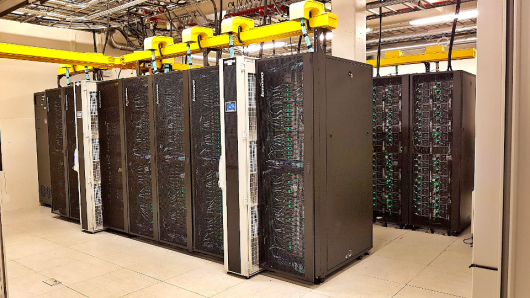
The supercomputer Fram, which for the past nine years has provided computing power to a wide range of Norwegian research projects, has arrived in the Netherlands. Fram was the very first national supercomputer that Sigma2 purchased and took responsibility for after the company was established in 2015.
New life in Europe
Unlike the original Fram, the polar vessel that took Fridtjof Nansen to the North Pole and Roald Amundsen to the South Pole, our Fram will not be left to deteriorate and then end up in a museum. Parts of the supercomputer, which was placed at UiT, will now be given a new life in Europe.
Supercomputers like Fram typically have a lifespan of around 5–6 years, as maintenance contracts expire, and new technology is continually developed. The fact that Fram has been in operation for so long is due to its strong stability towards the end of its life and its great importance to the research community.
In December, Fram was switched off for good. Most active research projects have now been transferred to the new national supercomputer, Olivia. Olivia is so powerful that she can handle the increased demand for computing power for traditional high‑performance computing and the development of artificial intelligence, while also taking over Fram’s workload and later that of the supercomputer Saga as well.
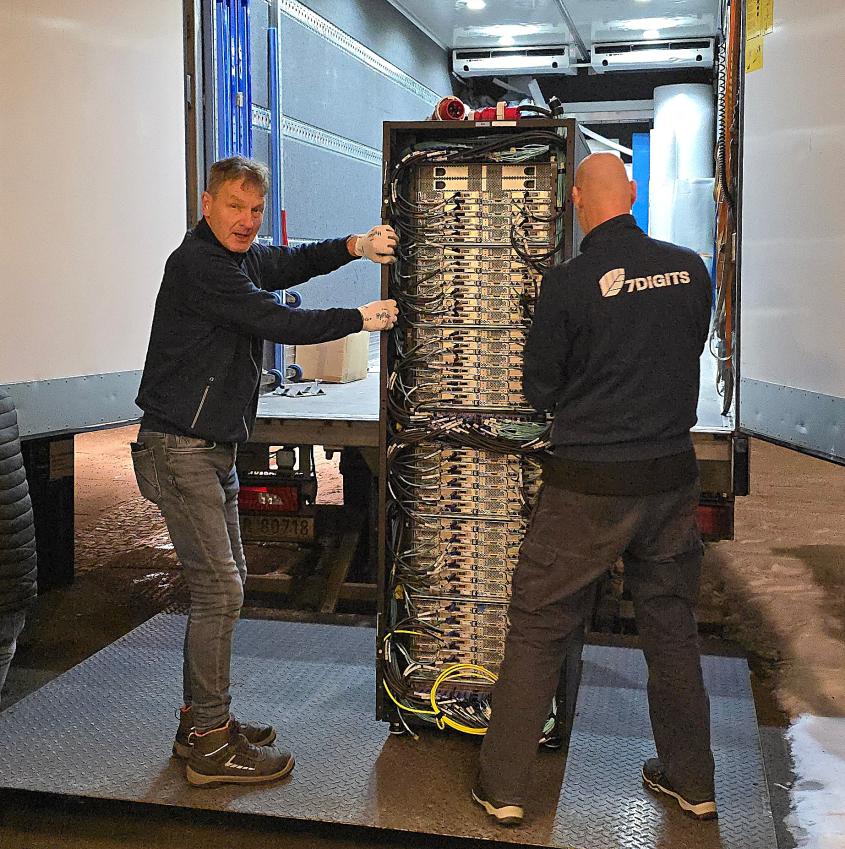
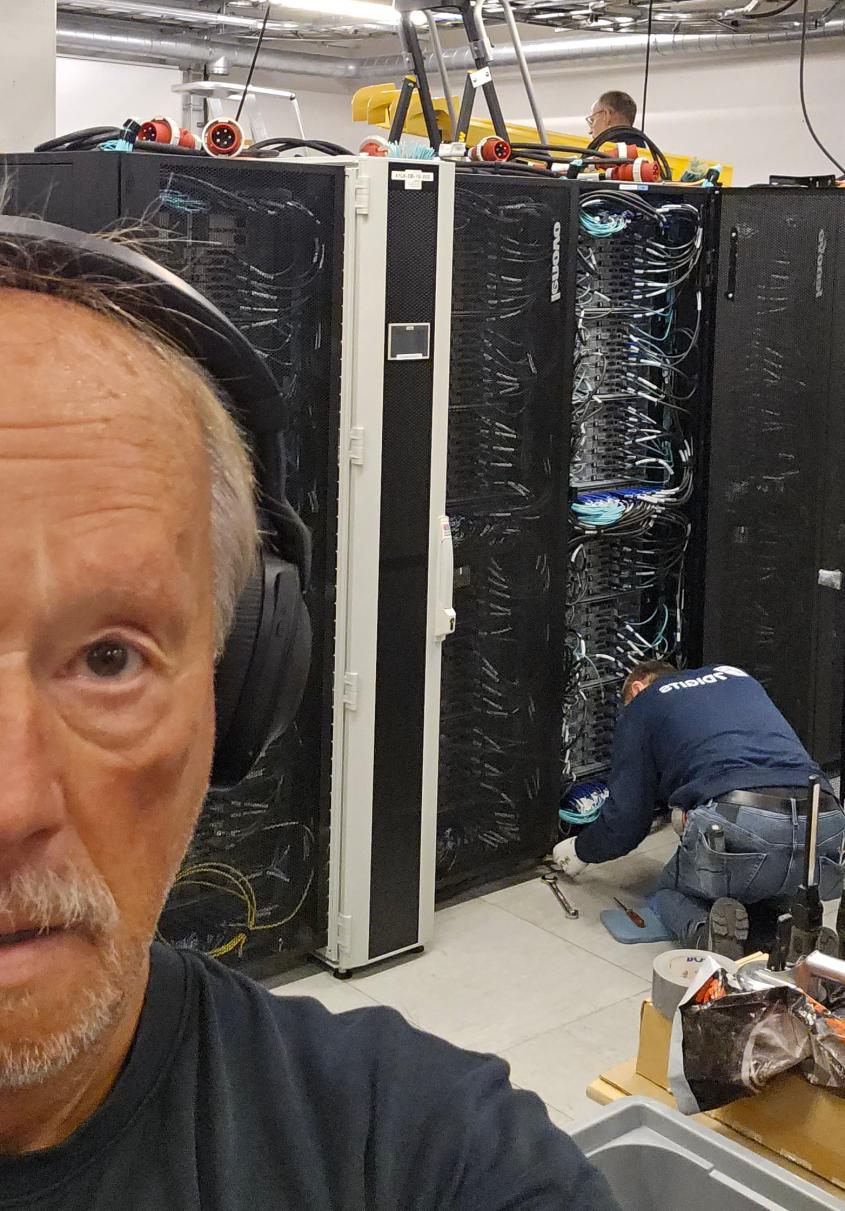
Even though Fram has been shut down, it is not quite “end of life” yet, at least not for all of its components. Several parts still have high value on the spare‑parts market. The Dutch company 7Digits, which specialises in reselling components, has been in Tromsø this week to dismantle Fram. The aim is for as many parts as possible to gain a new life in European data centres, rather than ending up as electronic waste.
Looking abroad for reuse
Fram has been a role model for sustainable operation among supercomputers. Around 90% of the system was based on liquid cooling, a solution that makes it possible to run densely packed compute nodes efficiently and with a low environmental footprint. Compared with traditional air cooling, liquid cooling results in both lower power consumption and less need for air conditioning in the data centre.
Norway’s data centre industry is growing rapidly, but no established Norwegian providers are offering specialised decommissioning of supercomputers or data centre equipment.
—That is why we are using a Dutch firm for this, says Helge Stranden from Sigma2, who was present during the decommissioning in Tromsø. —By selling equipment that is still functional and already adapted to liquid‑cooled environments, we are not only contributing to reuse but also helping to extend the lifetime of several high‑performance computing facilities across Europe.
This shows how technological choices and responsible decommissioning go hand in hand with greener data‑centre operations.
— At a time when data centres and technology infrastructure account for an ever‑increasing share of energy use and waste production, albeit with far more computing power per kilowatt consumed, it makes sense to focus on reuse wherever we can to reduce our environmental footprint, Stranden concludes.